
Cat Laser Therapy: How It Eases Pain and Speeds Healing

Cat laser therapy is a noninvasive treatment that uses focused light to reduce pain and inflammation and help damaged tissue heal faster. Most cats handle it well, because sessions involve no needles, no medication, and usually no sedation. Cats are experts at hiding discomfort, so many owners don’t notice a problem until it has progressed. Gentle, low-stress tools like laser therapy give veterinarians another way to help cats feel better without adding to their anxiety. At Feline Medical Clinic in Vancouver, WA, our cats-only team uses laser treatment as one part of a broader care plan built around each patient. In this guide, we cover how cat laser therapy works, why it relieves pain, which feline conditions it can support, and what a typical appointment looks like. If your cat is recovering from surgery, living with arthritis, or healing from an injury, this information can help you have a more informed conversation with your veterinarian.
What Is Laser Therapy for Cats?
Laser therapy for cats is a form of light-based medicine that stimulates healing at the cellular level. Veterinarians sometimes call it photobiomodulation, a term that describes how certain wavelengths of light change the way cells behave.
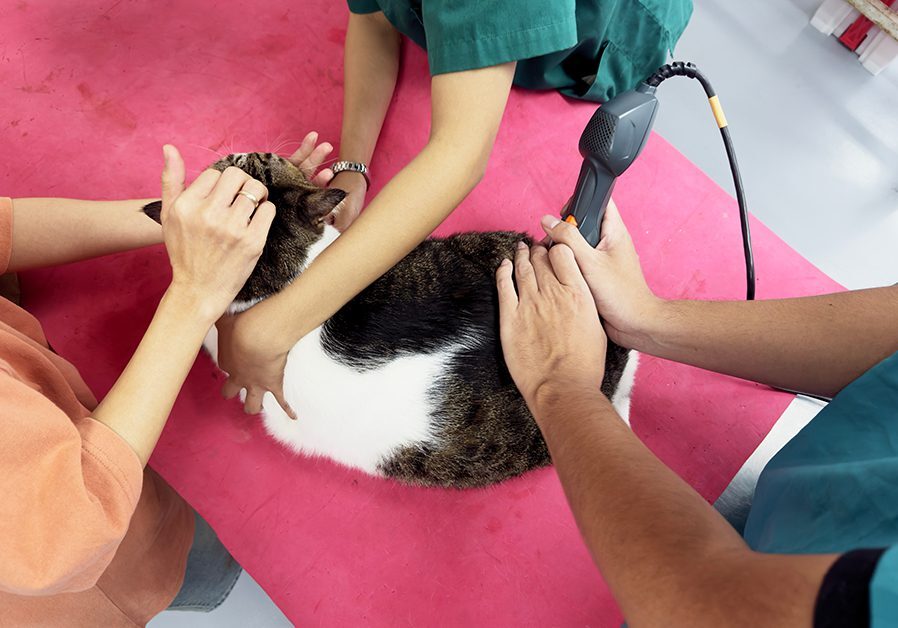
During a session, a veterinary team member moves a handheld wand over the affected area. The wand delivers concentrated light energy through the fur and skin into the muscles, joints, and soft tissues below. Your cat may feel a mild, soothing warmth, and many patients relax or even fall asleep on the table. Unlike surgical lasers, which cut or remove tissue, therapeutic lasers work at a much lower intensity and leave the skin intact.
Therapeutic Lasers vs. Surgical Lasers
The word “laser” can sound intimidating, so it helps to know that not all lasers do the same job. Surgical lasers concentrate energy to make precise incisions. Therapeutic lasers, often Class III or Class IV devices, spread gentler energy across a treatment zone to encourage repair. Cat laser therapy falls into this second category, and its purpose is comfort and recovery rather than cutting.
Is Laser Therapy Safe for Cats?
When a trained veterinary professional performs it, cat laser therapy has an excellent safety record. The team uses protective eyewear for everyone in the room, including your cat, because the light can harm the eyes. Veterinarians also avoid treating certain areas, such as known tumors or the abdomen of a pregnant cat. A full exam before treatment allows your veterinarian to confirm that your cat is a good candidate and to tailor settings to your cat’s size, coat color, and condition.
How Do Lasers Provide Pain Relief for Cats?
Lasers relieve pain in cats by reducing inflammation, calming overactive nerves, and boosting the body’s natural repair processes. The light energy triggers a series of changes inside cells that work together to make a sore area feel better.
The process begins in the mitochondria, the tiny structures that power every cell. When laser light reaches them, they produce more adenosine triphosphate (ATP), the molecule cells use for energy. With extra fuel available, injured cells can repair themselves more efficiently. At the same time, the treatment encourages blood vessels to widen, which brings oxygen and nutrients into the area and carries away waste that contributes to swelling and soreness.
Here’s a closer look at what cat laser therapy does inside the body:
- Lowers inflammatory signals: The light helps reduce chemicals that drive swelling and tenderness.
- Releases endorphins: The body produces more of its own natural pain-relieving compounds.
- Slows pain transmission: Nerve fibers become less reactive, so fewer pain messages reach the brain.
- Relaxes tight muscles: Improved circulation can ease the muscle tension that often surrounds a painful joint.
- Reduces fluid buildup: Better lymphatic drainage helps swollen tissue return to normal.
When Do Cats Start to Feel Better?
Some cats show signs of improvement after their first or second visit, such as moving more freely or jumping onto a favorite perch again. Others, especially those with long-standing joint disease, need several sessions before owners notice a change. Because the effects build over time, your veterinarian will usually recommend a series of treatments rather than a single appointment.
What Are the Other Benefits of Veterinary Laser Therapy?
Beyond pain control, veterinary laser therapy offers several advantages that make it especially appealing for feline patients. Cats often find vet visits stressful, so a treatment that is quick, quiet, and hands-off can make a big difference.
The treatment requires no pills, which is good news for owners of cats who resist oral medication. It rarely calls for sedation or anesthesia, so cats go home alert and comfortable. It also works well alongside other therapies, such as medications, supplements, and weight management plans, and it produces few if any side effects when a trained team performs it. For some cats, adding laser sessions may even allow the veterinarian to lower the dose of pain medication.
A Helpful Option for Senior Cats
Older cats frequently live with more than one health issue at the same time. A senior cat with arthritis might also have kidney disease or liver changes that limit which medications are safe to use. Cat laser therapy gives veterinarians a drug-free way to address discomfort in these complex patients. It can be a valuable part of a long-term comfort plan for aging cats who still have plenty of good years ahead.
Support for Surgical Recovery
Laser treatment can also help after procedures such as spays, neuters, mass removals, and dental extractions. Applying light to the surgical site may reduce swelling around the incision, ease post-operative soreness, and encourage tissue to knit together. If you ever notice a lump, redness, or discharge at your cat’s incision, contact your veterinarian so the team can examine it rather than waiting to see if it resolves.
What Cat Health Conditions Can Be Treated with Laser Therapy?
Veterinarians use cat laser therapy for a wide range of conditions, from sudden injuries to chronic diseases. The right fit always depends on an accurate diagnosis, which is why an exam comes first.
Common reasons a veterinarian may recommend cat laser therapy include:
- Osteoarthritis and degenerative joint disease
- Back and neck pain, including intervertebral disc problems
- Sprains, strains, and other soft tissue injuries
- Wounds, abscesses, and slow-healing skin lesions
- Post-operative incisions and dental extraction sites
- Inflammatory gum and mouth conditions, as part of a broader treatment plan
- Lick granulomas and other inflamed skin areas
Arthritis: The Most Common Use
Research suggests that most cats over age 12 show signs of arthritis on X-rays, yet many owners never see obvious limping. Instead, arthritic cats may stop jumping onto counters, groom less often, miss the litter box, or become irritable when touched. Cat laser therapy can help these patients move more comfortably and get back to the routines they enjoy.
Why a Diagnosis Matters
Signs like reduced activity or hiding can point to many different problems, some of which need entirely different care. Laser treatment works best as part of a plan based on a thorough exam, and sometimes diagnostic imaging or lab work. Your veterinarian will explain whether light therapy makes sense for your cat and how it fits with other recommended treatments.
How Long Does a Cat Laser Therapy Treatment Take?
Most cat laser therapy sessions take only a few minutes per treatment area, and the entire appointment often lasts 15 to 20 minutes. The short duration is one reason cats tend to tolerate the procedure so well.
What Happens During an Appointment
Your cat rests on a padded table or in a cozy spot where they feel secure. Everyone puts on protective goggles, and your cat may wear small eye shields or have their eyes gently covered. The technician then glides the laser wand over the treatment area, often while offering pets, treats, or calm conversation. There is no clipping, no restraint beyond gentle handling in most cases, and no recovery time afterward. Many cats head home and carry on with their day as usual.
How Many Sessions Will My Cat Need?
The number of visits depends on the condition and how long your cat has had it. A fresh incision or minor injury might need only a handful of sessions over a week or two. Chronic issues like arthritis usually start with more frequent appointments, often a few times per week, followed by maintenance visits spaced farther apart. Your veterinarian will adjust the schedule based on how your cat responds and update the plan as your cat’s comfort improves.
Explore Cat Laser Therapy at Feline Medical Clinic in Vancouver, WA
Cat laser therapy offers a gentle, drug-free way to relieve pain, calm inflammation, and support healing for cats of every age. Whether your cat is bouncing back from surgery, coping with stiff joints, or healing from an injury, this treatment may help them feel more like themselves. Because every cat is different, the best first step is an exam with a veterinarian who understands feline behavior and medicine. At Feline Medical Clinic, our team focuses exclusively on cats, and we design each treatment plan with your cat’s comfort and stress level in mind. We’re happy to answer your questions and help you decide whether laser therapy is a good fit. To learn more or schedule an appointment for your cat in Vancouver, WA, call us at (360) 892-0224.
Recent Posts
About Us
Located in Vancouver, WA, we’ve been dedicated to feline-only care since 1977 and proudly maintain both AAHA accreditation and Cat Friendly Practice Gold-level status. Our team creates a calm, cat-focused environment designed to meet the unique needs of every feline patient we see.